


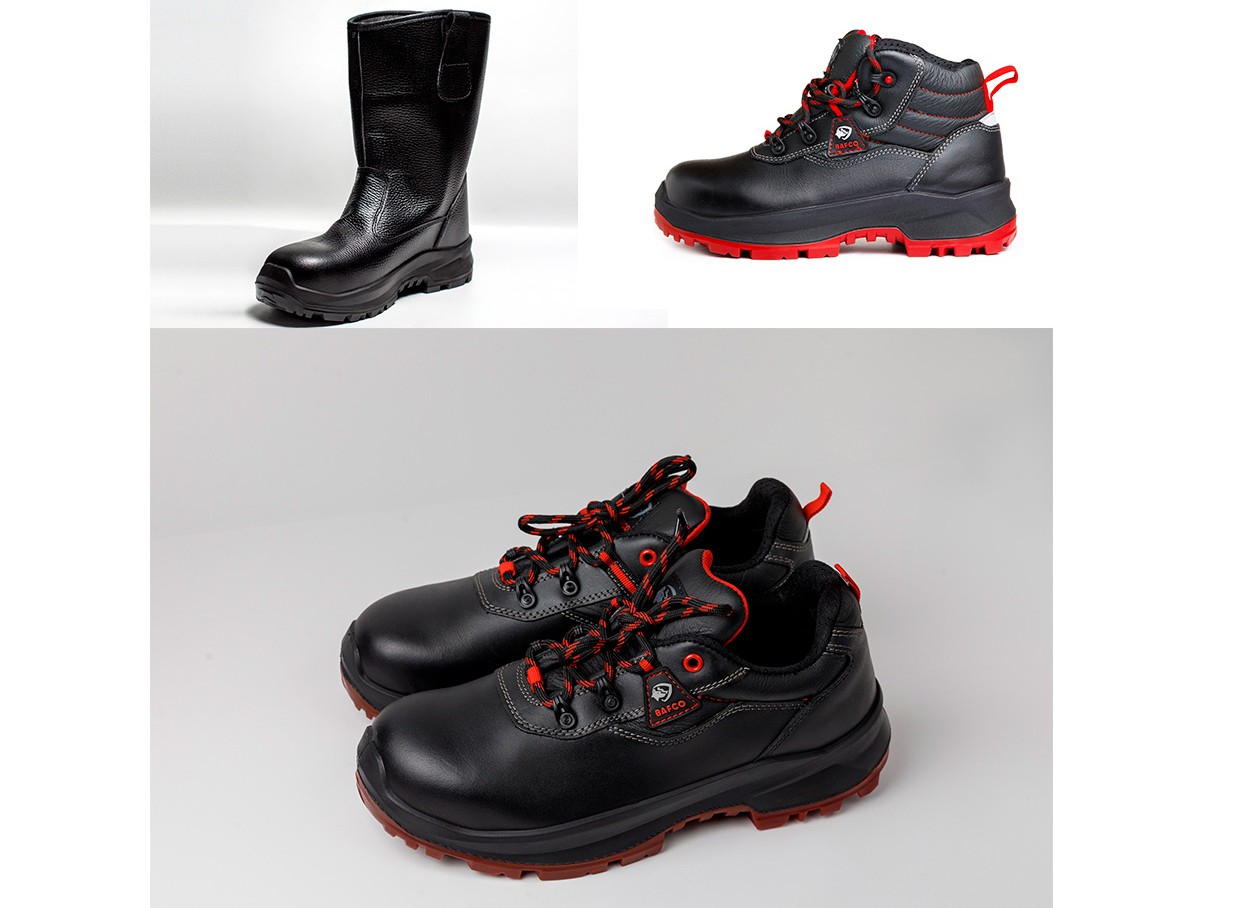
Protective Footwear Standards
Safety Footwear Standards: Guaranteeing Workplace Safety
In today’s industrial world, worker safety is a top priority. Safety shoes play a crucial role in preventing work-related injuries, especially in high-risk environments. To ensure reliability and compliance, all professional footwear must be certified and meet established standards.
International and National Standards
EN ISO 20345 (Europe)
Protective toe cap resistant to loads up to 200 J
Puncture-resistant sole
Slip resistance
Resistance to oils and chemicals
GOST 12.4.137-2001 / GOST EN ISO 20345-2014 (Russia and CIS)
Resistance to heat and frost
Electrical insulation properties
Water-repellent and breathable features
ASTM F2413 (USA)
Protection against impact and compression
Resistance to electrical hazards
Heat resistance and chemical protection
Safety Footwear Classes
Class Description Application S1 Toe protection, antistatic Logistics, warehouses S2 S1 + water-repellent properties Food industry S3 S2 + puncture-resistant sole Construction, heavy industry S4/S5 Fully waterproof (PU/rubber) Wet environments, agriculture
How Standards Are Applied in Production
Our factory strictly adheres to all norms and standards in footwear manufacturing. Every stage — from raw material selection to final testing — undergoes quality control:
We use certified materials from reliable suppliers.
A production control and laboratory testing system is implemented.
Footwear is marked with the relevant standard that guarantees its safety.
Why Is This Important?
Reduces the risk of injury
Increases worker comfort
Complies with inspection and audit requirements
Demonstrates the company’s responsible approach to occupational safety